
Warning: Themes of mental health including suicide may be difficult for some readers.
Music has always been more than sound. It’s a universal language, a space to share poems, half‑formed thoughts, big feelings, and the things that don’t always come out easily in conversation. Sometimes it’s celebration. Sometimes it’s escape. And sometimes, it’s the safest place to be honest.
For Capricore, music is exactly that space.
Capricore: The band
L-R: James Zambucka (keys), Aidan Ripley (guitar/vocals), Jerrick Wilcox (drums), and Ollie Chambers (bass)
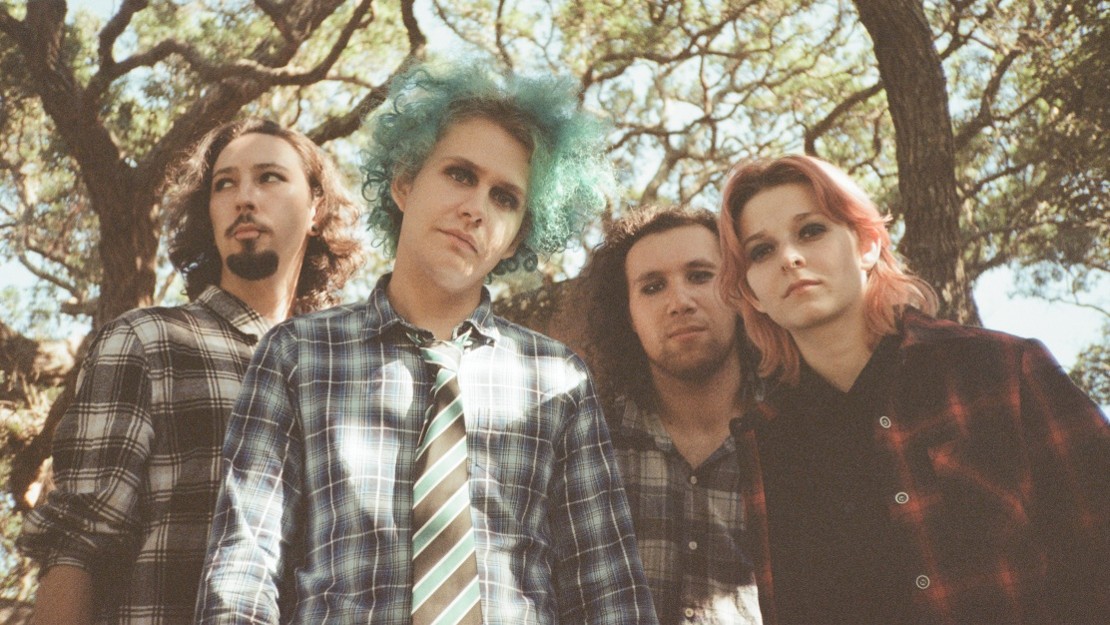
The Auckland‑based rock band’s latest single, Yeah Nah Yeah, takes the familiar energy of Kiwi pub‑rock and uses it to hold something heavier. Released during New Zealand Music Month, the track is loud, catchy, and instantly recognisable, but just beneath the driving guitars is a powerful reflection on mental health, identity, and the cost of not saying what we really mean.
“Do you remember all those boys? All that’s left are their worn‑out shoes.”
Frontman Aidan Ripley delivers the line plainly, letting the words do the work. It references the 606 empty pairs of shoes displayed in Blenheim, each representing someone in Aotearoa who died by suicide. The imagery remains painfully relevant, in recent years, around 600 people each year have continued to lose their lives to suicide in New Zealand. It’s a moment that quietly reframes the entire song.
“I wrote it when I was sixteen, during my first year at Te Kura,” Ripley says. “It came from a composition assignment where one of the suggested themes was ‘home’. I thought that sounded boring, but once I dug into what being a New Zealander actually feels like, it got heavy really fast.”
Ripley wrote Yeah Nah Yeah in 2020 while studying through Te Kura. What began as schoolwork quickly became deeply personal. The song unpacks the contradictions of life in Aotearoa: our humour, our pride, our isolation, and the pressure to toughen up and keep going.
“There’s a real ‘get on with it’ attitude here,” Ripley says. “Sometimes when people say ‘yeah nah’, what they really mean is ‘I’m not coping’, but they don’t know how to say that.”
The lyrics move between everyday Kiwi imagery and broader historical themes. Some of the references, including those tied to World War One and its long‑term impact on New Zealand culture, came directly from Ripley’s History studies. Together, they paint a picture of a country that’s close‑knit and beautiful but shaped by silence and endurance.
Through his studies, Ripley was connected with keyboardist James Zambucka, who has been part of the band ever since. Both studied music with teacher Victoria Thompson, and both look back fondly on that creative time.
“Te Kura gave me room,” Ripley says. “It let me focus on songwriting but also taught me how to back myself and think longer‑term.”
While Yeah Nah Yeah looks directly at mental health struggles in Aotearoa, it isn’t a critique of Kiwi culture. Instead, it’s an invitation, to listen more carefully, to be more open, and to meet honesty with empathy.
That intention is backed up with action. All proceeds from the digital single, along with profits from the band’s live shows, are being donated to Youthline NZ. The upcoming music video was filmed at Sheep World alongside the Springboard Trust, which supports rangatahi who have faced hardship.
For drummer Jerrick Wilcox, that theme is personal.
“I was bullied a lot at school, and my whole life I’ve been judged for my FASD and ADHD. If this song helps someone feel less alone, that means everything.”
Capricore recently completed their first North Island tour and are working towards releasing their debut record later this year.
You can find Capricore’s music on their website: Capricore | band
NZ Music Month

This New Zealand Music Month, Capricore reminds us that sometimes the bravest thing we can do is say what we really mean, and just as importantly, listen when others do the same.
Help is available in Aotearoa, free and confidential:
- Youthline (ages 12–24): 0800 376 633 or text 234
- Need to Talk? Call or text 1737 anytime
- Lifeline: 0800 543 354 or text HELP to 4357
- Suicide Crisis Helpline: 0508 TAUTOKO (828 865)
- Samaritans: 0800 726 666
- What's Up: 0800 WHATSUP / 0800 9428 787. This is free counselling for 5 to 19-year-olds.
- Rainbow Youth: (09) 376 4155
- Asian Family Services: 0800 862 342 or text 832 Languages spoken: Mandarin, Cantonese, Korean, Vietnamese, Thai, Japanese, Hindi, Gujarati, Marathi, and English.
- Rural Support Trust Helpline: 0800 787 254.
If you or someone else is in immediate danger, call 111.