Ākonga in Wairoa are stepping confidently into their role as taiao kaitiaki (environmental guardians), turning everyday learning into meaningful action that benefits both their environment and community. Through hands on experiences and creative expression, students are learning not only how to reduce waste, but why their choices matter.
Working closely with the Wairoa District Council’s Recycling Centre, ākonga engaged in a series of learning experiences delivered locally at the Wairoa War Memorial Hall. Recycling Centre staff brought practical resources and real world examples directly to ākonga, making the learning accessible, relevant and grounded in local context.
A key learning was the sheer volume of recyclable material that is incorrectly disposed of. Even with good intentions, items placed in the wrong bins can contaminate recycling streams, meaning valuable resources are ultimately sent to landfill. This process helped ākonga see how small choices at home can have a much wider environmental impact.
Recycling Centre kaimahi Noeleen Baty, who works at the landfill recycling centre operated by Smart Environmental on behalf of the council, shared her knowledge with students. She explained the meaning of the triangle numbers found on plastic products, which identify plastic types and whether they can be recycled locally. For many ākonga, this was the first time they had realised not all plastics are the same, and that informed choices play an important role in reducing waste.
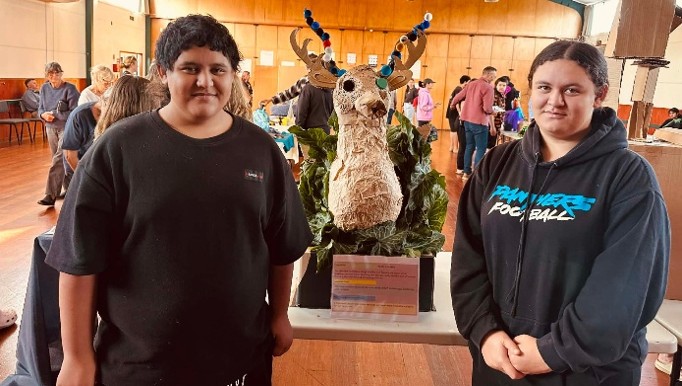
Stag Head
Miia Rewi-Mouat and JJ Rewi-Mouat
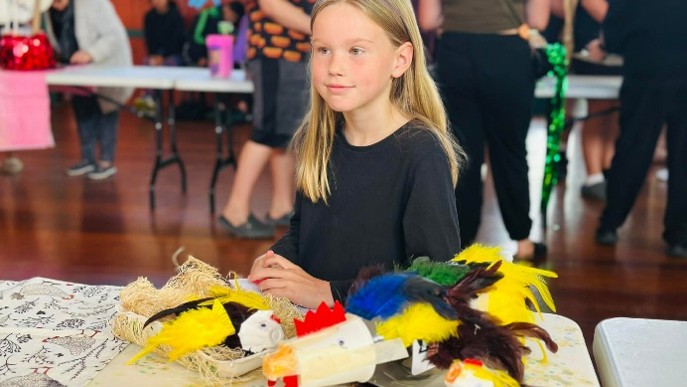
With a strong foundation in environmental learning, the kaupapa then moved into a creative phase. Students were challenged to transform what they had learned into artworks made entirely from waste destined for the landfill or recycled materials, combining environmental responsibility with creative licence. The result was a vibrant and imaginative exhibition that brought learning to life.
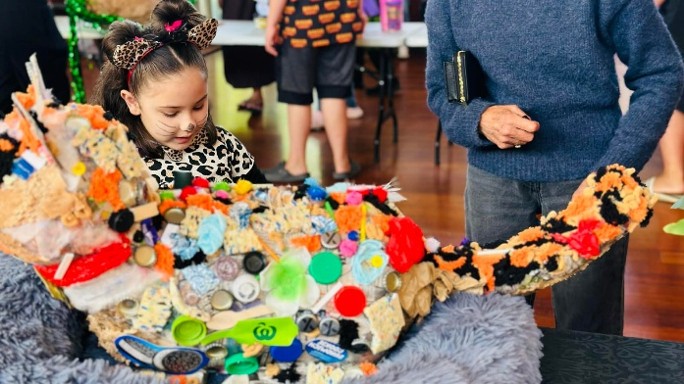
Many artworks reflected environments familiar to the students. Animals featured strongly, including stags, horses, cats and chickens, representing everyday life in and around Wairoa. These pieces highlighted the close connection ākonga have with their whenua, animals and community, while showing how discarded materials can be given new purpose.
Cat
Jesse Dickson
Other works explored imagination and storytelling. Inspired by mythical and ancient creatures such as dinosaurs, the dire wolf and Cerberus, the three headed guardian of the underworld, students blended history, mythology and creativity. These artworks demonstrated how recycled materials can carry both narrative depth and visual impact.
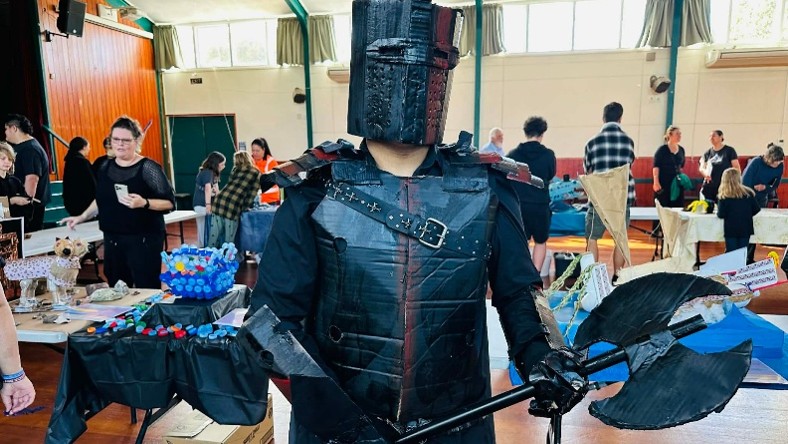
Original characters added further depth to the exhibition. From armoured knights and post apocalyptic figures wearing gas masks, to recreated favourite characters, these imaginative pieces reflected personal interests while delivering strong environmental messages. Each artwork demonstrated how art can be a vehicle for expression, identity and change.
The exhibition concluded with a celebration recognising creativity, effort and collaboration.
Knight
Ko Harison
At the heart of the kaupapa is teacher Michelle Coles, whose vision and commitment helped bring the project to life, supported by kaimahi, whānau, judges and the wider Wairoa community.
“Our ākonga took their learning beyond the classroom by committing to teach at least one person in their whānau and one person in the wider community. The aim was simple but powerful, to share knowledge, spark conversations and inspire Wairoa to think differently about waste and environmental responsibility,” says Michelle.
Throughout the project, ākonga were also recognised through Waibux, Te Kura in Wairoa’s points-based reward system. Ākonga earned points for their mahi, effort, collaboration and participation, reinforcing positive learning behaviours alongside creativity and teamwork.
“Waibux helped acknowledge the hard work that went into every stage of the kaupapa,” says Michelle. “It reinforced that commitment, persistence and pride in what you create all matter, not just the final result.”
What’s clear is that these rangatahi aren’t just learning about sustainability, they’re living it, and in doing so, they are helping inspire their community to rethink waste, one conversation and one recycled creation at a time.
Chickens
Cara Stead