
Warning: This story has themes of mental illness and suicide.
Te Kura counsellor and long-standing educator Shahranee Faavae has recently graduated with a Master of Counselling from the University of Auckland, marking a significant milestone in her career and a powerful step forward in her commitment to supporting rangatahi across Aotearoa.
Based in Auckland and working across Te Kura and St Paul’s College, Shahranee’s journey has been shaped by more than 20 years in education, a deep connection to Māori and Pacific ākonga, and a personal drive to strengthen wellbeing outcomes for young people.
For Shahranee, the decision to pursue counselling was not just professional, it was deeply personal. After decades working alongside rangatahi, she recognised that many were still struggling both academically and emotionally.
“After two decades in education, I knew I needed to be doing more to support the health and wellbeing of our young people.”
Shahranee Faavae
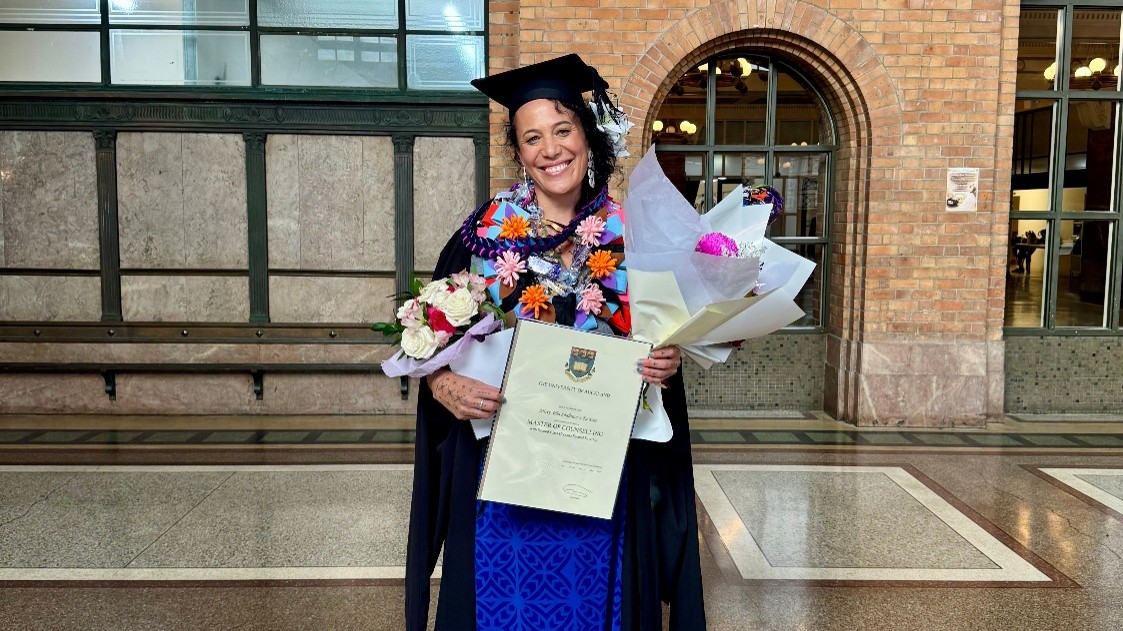
The catalyst came through heartbreaking loss. Having lost both her brother and, years later, her nephew to suicide, Shahranee saw firsthand how little had changed in how support is provided to rangatahi over time. This experience shaped her focus and her research titled As ‘Exploring suicide with young Pasifika men in Aotearoa.’
Across Aotearoa, the need for this work is significant. Around 20 percent of Pacific peoples report experiencing high or very high psychological distress, one of the highest rates across all groups. At the same time, Pacific communities often face barriers to accessing mental health support, highlighting the importance of culturally responsive services.
“There are still big gaps in how we support our young people, especially for Māori and Pacific communities.”
Before stepping into counselling, Shahranee had already achieved a Master of Educational Management. Her initial goal was to move into senior leadership roles. However, as a deputy principal, she found herself increasingly distanced from students.
That realisation led her to reimagine her pathway, choosing roles that kept her grounded in relationships and directly connected to ākonga. It is a decision that continues to shape her impact today.
“I realised I wanted to be in a space where I could make a real difference with students, not removed from them.”
Her counselling work has since spanned both face-to-face and online environments. At St Paul’s College, where many students are Māori and Pacific, she was able to bring her research to life in a meaningful and culturally grounded way.
Building trust has been central to her approach. Whether it was spending time in classrooms or playing basketball with students at break, Shahranee focused on removing stigma and creating safe, open spaces for young people.
“It’s about building relationships and creating a space where students feel safe to be vulnerable.”
At Te Kura, working online across the motu has presented new challenges, but also opportunities. Shahranee has embraced different ways of connecting, strengthening links with kaimahi and engaging through huinga ako and fono to ensure students know support is there and accessible.
This is especially important, as research shows Pacific peoples are less likely to access mainstream mental health services, often due to stigma, cultural barriers, and a lack of culturally safe care.
“Being visible and connected is key, so students know there’s someone who understands their world.”
Shahranee with her children celebrating her graduation
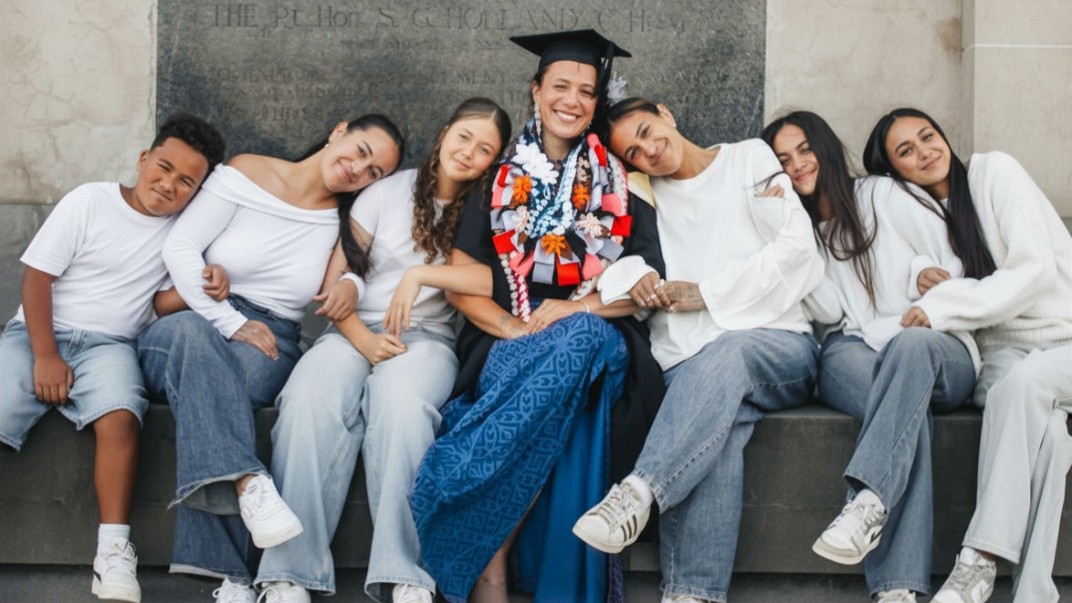
Shahranee also brings another lens to her work: being a mother of six. Her experiences at home have shaped her understanding of individuality and empathy, reinforcing that no single approach works for every young person.
This perspective has strengthened her patience and adaptability, allowing her to respond to each ākonga with care and understanding.
“My children taught me early that one approach doesn’t work for everyone.”
When it comes to measuring success, Shahranee keeps it simple and grounded. For her, success often begins with a student simply showing up.
While there are milestones such as overcoming anxiety, she acknowledges that many challenges young people face are ongoing. Her role is to support them in navigating these challenges and building tools for everyday life.
“Success for me is when they turn up, because that’s often the hardest step.”
Looking ahead, Shahranee is passionate about increasing access to counselling for Māori and Pacific learners at Te Kura. Across Aotearoa, Pacific communities continue to face inequities in wellbeing outcomes, including barriers to education, income stability and access to services.
Her goal is not just to support students through immediate challenges, but to see that support flow into their wider lives, helping them achieve both personal and academic success.
“I want to see more Māori and Pacific students accessing our services and feeling supported to succeed in all areas of life.”
For Shahranee, counselling has been more than a career move, it has been a journey of growth, service and purpose. Her work continues to create spaces where rangatahi feel seen, heard and supported.