
The seed and the soil: 1976 and the Hill Report
The story of early childhood education at Te Kura began with a four-line recommendation by an inquiry committee. In 1971, The Committee of Inquiry into Pre-School Education (The Hill Report) recommended that consideration be given to setting up pre-school courses for children in isolated areas, or with physical challenges.
In response to this call, in 1976, Te Kura, formerly known as the Correspondence School, appointed two kindergarten teachers, Mary Wood and Cushla Scrivens, to design a delivered-by-distance early childhood education programme to provide equity for rural families by offering them access to pre-school education.
"Individual programmes, active participation, and parent involvement were the pillars that underpinned everything right from the beginning.”
– Mary Wood, Early Childhood founding kaiako
These principles have remained at the heart of the programme for 50 years, continuing to emphasise the importance of placing the ākonga (student) at the centre of learning, building strong relationships through whakawhanaungatanga, and supporting Te Kura's commitment to learning for anyone, anytime and anywhere.
“This is a story born from a deep respect for the ākonga and whānau across the country, shaped by the tireless hands of pioneering educators, and propelled visionary leaders. It is a journey that honours the past while boldly facing the next fifty years.”
– Te Rina Leonard, Chief Executive
Whānau received learning resources at home
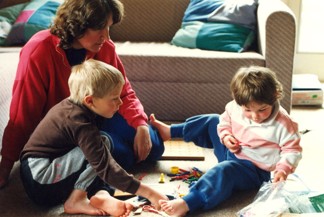
For five decades, qualified and registered teachers have delivered a free, individualised learning programmes to some of Aotearoa New Zealand's most remote farmsteads and islands, to itinerant families, and to those unable to attend early childhood services due to illness or special circumstances – recognising that regardless of circumstances or location, all tamariki deserve access to high-quality early childhood education.
“Everything went out in green canvas bags that were made by the prisoners at New Plymouth prison.”
– Mary Wood, Early Childhood founding kaiako
From conception, it has been the partnership between whānau (families) and kaiako (teachers) that has allowed this programme to respond to the interests, learning needs and learning dispositions of thousands of ākonga, and has supported the aspirations of each whānau.
Guided by the principles and goals of New Zealand’s Early Child Curriculum Te Whāriki (2017), the programme today recognises that the wider world of family and community is an integral part of Early Childhood education.
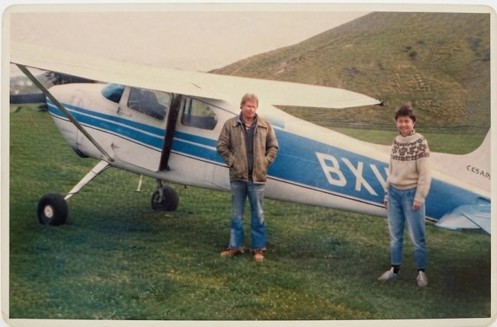
Ros West with a local transport service
Navigating back country and the airwaves
As the service expanded into the 1980s, educators like Ros West joined a growing, close-knit team where home visits became vital, eye-opening experiences. For teachers who were often 'townies', traversing the country meant navigating unbridled riverbeds and cliff-skimming tracks into places like Kimiākau/Skippers Canyon. Beyond geographic isolation, they encountered profound social isolation.
"My most memorable one is the family where there wasn’t a road, so they came out in their little plane to pick me up. The weather deteriorated and I was stuck in there for three days, so I ended up riding horses, helping kill rabbits and doing things that I wouldn’t normally be doing."
– Ros West, Early Childhood kaiako
West recalls that one of the most fun parts of the job was the strong culture of connection built to support one another through the unique demands of their roles. This camaraderie truly came alive during hands-on workshop days.
"Sometimes we would down tools and spent the day designing and making games.”
Innovation and embracing technologies were apparent from the start. Beyond responding to individual learning needs and interest, creating resources and games, and visiting families in the field, the team also took to the airwaves to reach parents, producing early broadcasts on topics such as how to weave science into a child’s day-to-day learning, farming, waiata, and cooking. Recorded down at Broadcasting House, before being transferred to cassette tapes, stepping up to the microphone wasn't for the faint-hearted.
"You had to pass a test to have the right sort of voice! Those were the days of Philip Sherry reading the news. They didn't like the New Zealand accent!"
The reverse side of the tape was left blank, allowing kaiako to record personalised messages for learners and their families, who often reciprocated these messages, creating a meaningful two-way communication channel that strengthened relationships. This exchange also supported the development of confidence, communication skills, and engagement with technology for both tamariki and their whānau.
Whānau learning with and alongside each other
Staying anchored through being online
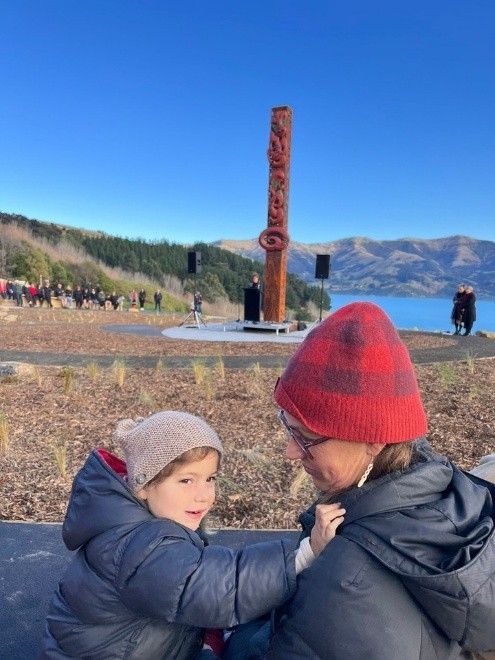
Today, kaiako use secure online platforms to share children's learning, meet with ākonga and whānau to provide online learning experiences, and send out termly resources and books to support learning at home.
For the Sinclair whānau, living in Tokyo, Japan, choosing Te Kura was about finding a bridge to home and community while living away. With three children moving through the early childhood education programme, the family relied on Te Kura to keep them anchored.
"We’ve loved the teachers' care and online connection, taking our local outings to the park or community centre and weaving them into fun lessons. Most of all, it's kept our kids connected to New Zealand culture while living overseas."
– Sinclair whānau
For Maire Haley, Te Kura has been a special part of her daughter’s early learning journey. The connection is even more meaningful because Maire was also a Correspondence School preschooler and still lives on the same family farm.
“Te Kura provided so many activities we could do at home. These lessons helped my daughter find her natural interest in storytelling and ways to explore and express her superpower.”
– Maire Haley, Early Childhood whānau
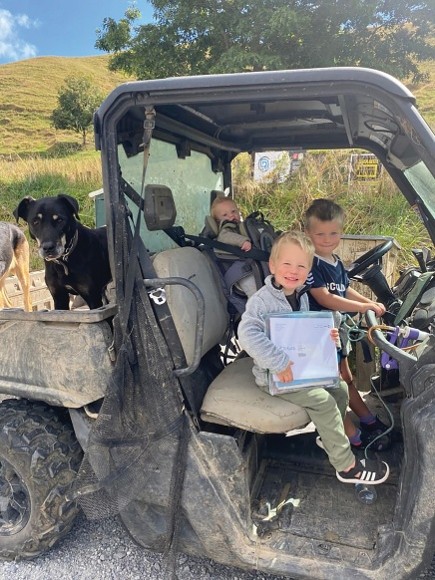
Life on a farm is always full-on for Mairi Whittle and her whānau, but finding the right learning support for her son, Tad, has made juggling everything much easier. The flexibility of the programme and having a supportive kaiako fits right into their busy rural routines.
“We don’t spend much time inside, but we love the Te Kura resources. It’s so nice to have someone so invested in Tad and keeping us on track. He's a wee bookworm, so it’s such a treat for him to receive new books in the mail.”
– Mairi Whittle, Early Childhood whānau
Picking up library books from the mailbox
Honouring our communities and looking to the future
In her closing remarks during the 25 Years of Early Childhood Education at Te Kura celebration, Cushla Scrivens reflected on the programme's enduring strength.
“The early childhood programme has been positioned since the beginning to be sufficiently flexible to respond to the needs of different sorts of families and to encourage them to participate in their children’s learning. The use of new technologies and possibly even new models of delivery could mean that essentially the world is your oyster”.
– Cushla Scrivens, Early Childhood founding kaiako
Embracing these words, the same pioneering and innovative spirit continues to guide the programme today as it responds to an ever-changing world of communication and technology.
At the same time, it remains grounded in Te Kura's core values: Manaakitanga, showing care and respect for others; Whanaungatanga, fostering meaningful relationships and a sense of belonging; and Tika, acting fairly, honestly, and with integrity. Together, these values ensure that ākonga remain at the centre of every decision and every learning experience.
Find out more about Te Ara Kōhungahunga - Early Childhood at Te Kura.